Monitoring Avian Productivity and Survivorship in Georgian Bay – Our First Year
In the summer of 2025, we launched Georgian Bay’s first MAPS bird banding station as part of our ongoing efforts to bring more conservation science to Georgian Bay.
MAPS stands for Monitoring Avian Productivity and Survivorship. It’s a project of the Institute for Bird Populations, a nonprofit organization founded in 1989 to study the causes for declining bird populations. Since the program began 36 years ago, over 1,400 locations have participated, representing nearly every Canadian province and American state. But the closest station to Georgian Bay was over 100 km away – so we decided to fill the gap by establishing a new station at the Robertson Nature Reserve in north Go Home Bay.
The MAPS program works by collecting standardized data on the birds that are present at each of its stations throughout the breeding season. When the data from all the stations is analyzed together, it allows researchers to make estimates about bird populations as a whole, including things like survival rates and reproductive success. The more stations that operate, and the more years that data is collected, the more detailed the picture becomes.

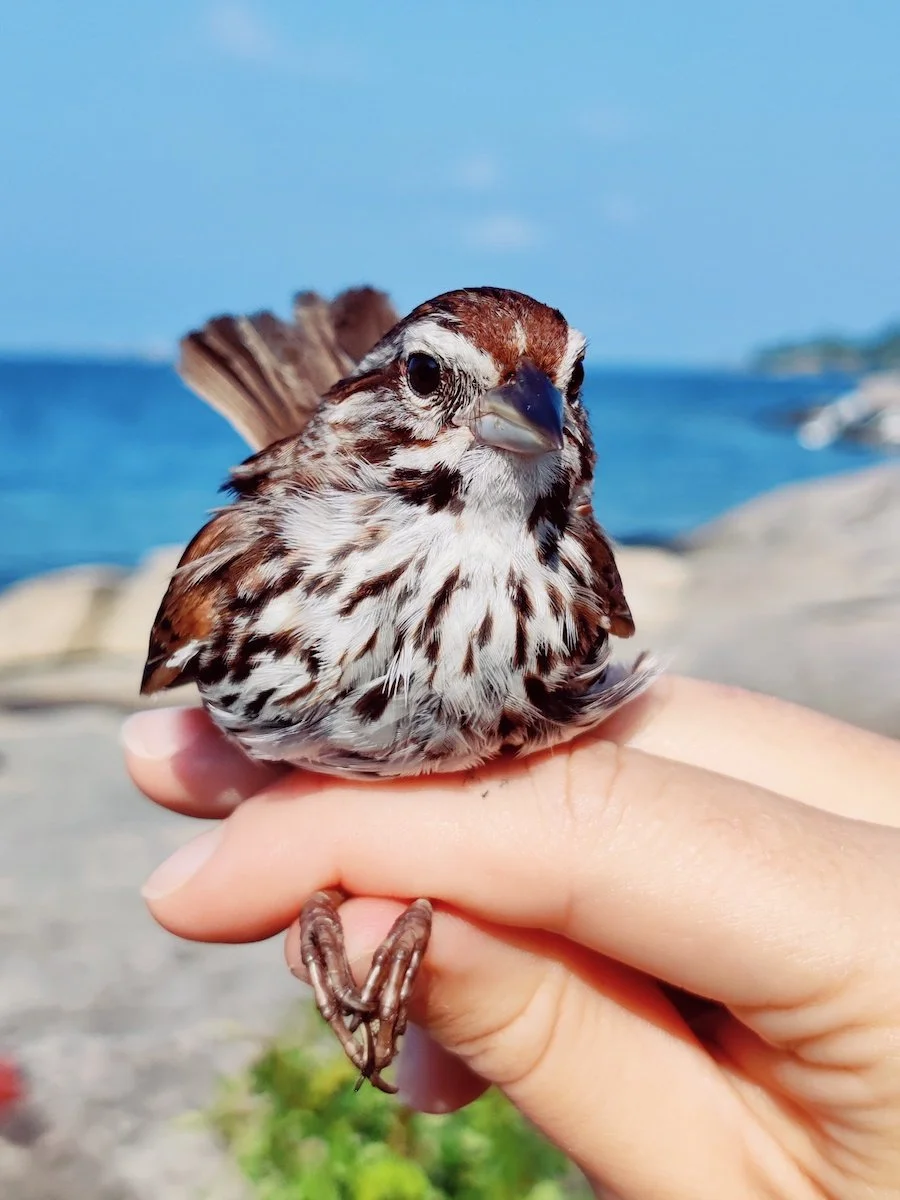
Running a MAPS station requires a commitment to banding birds once every 10 days throughout the breeding season. The procedure works as follows: on each banding day, mist nets are opened at dawn and left open for a period of 6 hours. (Mist nets are very fine mesh nets strung between poles – similar to a volleyball net - which birds can fly into and be safely extracted by researchers.) Research teams monitor the nets throughout the day, and each time a bird is caught, they record key data like age, sex, and body condition, place a band on the bird’s leg, and then release it back into the wild. The whole process is designed to take only a few minutes from capture to release.
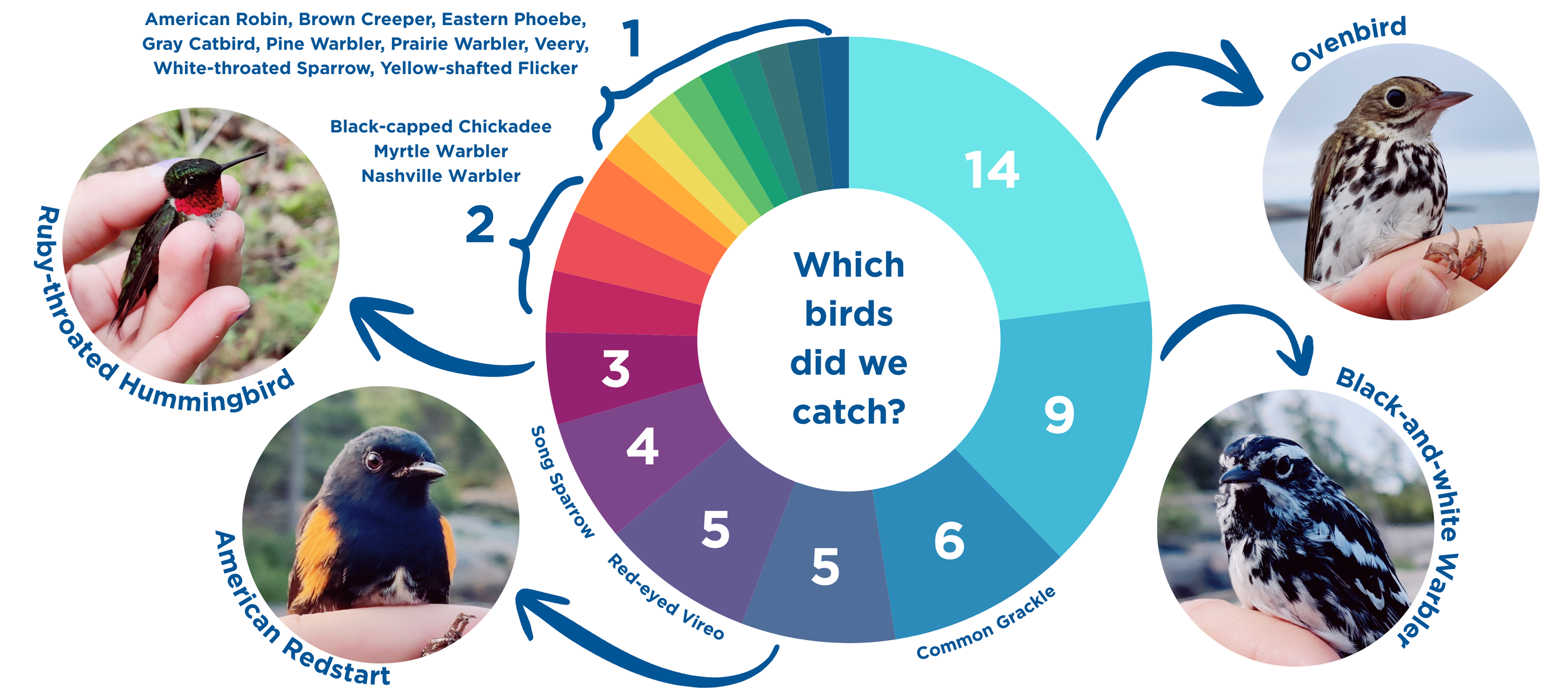
Our MAPS “station” was not a physical structure, but rather a series of 10 temporary nets that were set up for banding days and taken down at the end of the season. Our team of staff and research students ran seven monitoring days, beginning on June 8th and wrapping up on August 4th. We caught 61 birds in total from a variety of species and learned a lot about how to successfully operate a station like this in the Georgian Bay environment. The data we collected has been sent to the Institute for Bird Populations to support their broader research efforts. We’re already looking forward to next year!