
Species Spotlight: Staghorn Sumac (Rhus typhina)
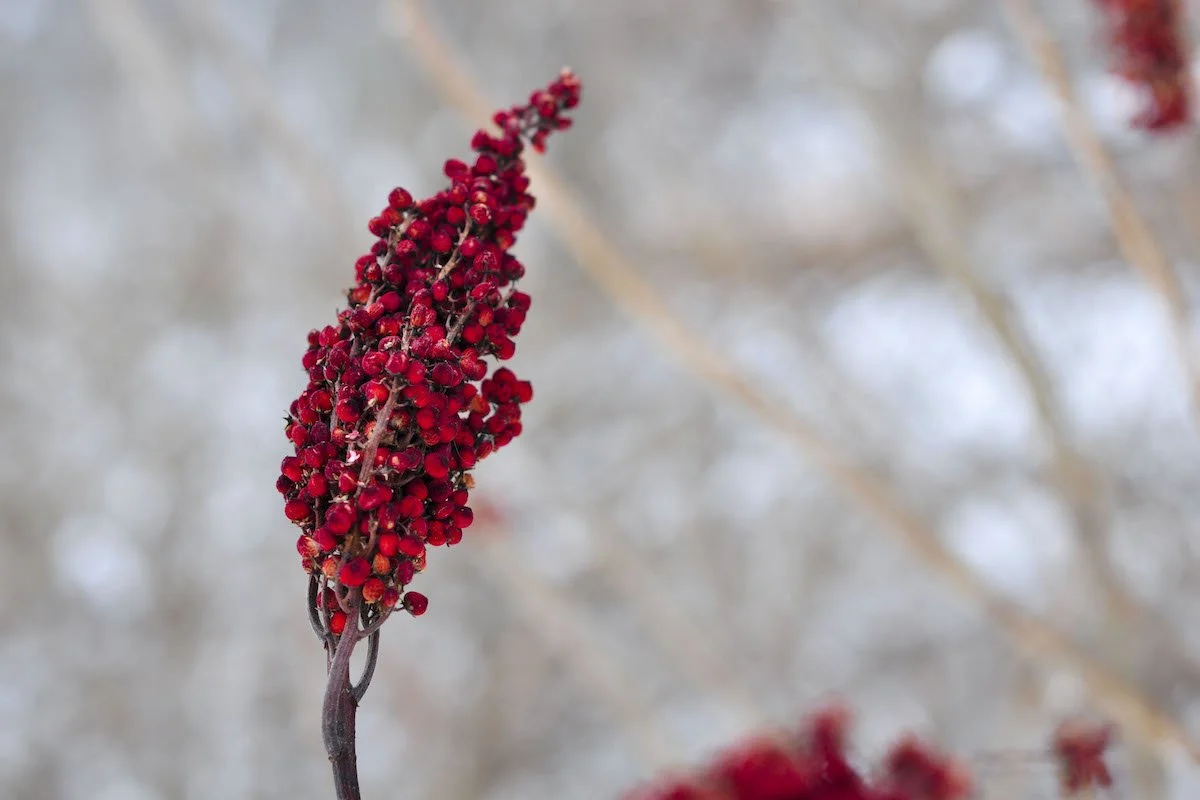
Staghorn Sumac berries in winter. Image: Esteve Conaway
At this time of year, a shrub that really stands out on the Georgian Bay landscape is the Staghorn Sumac. In spring, it's adorned with small greenish-yellow flowering clusters. These are soon replaced by the dark red, cone-shaped fruit that makes the plant so easy to identify. Through the summer, sumac blends in with surrounding vegetation, with its green, umbrella-like canopy of leaves. But in the fall, it truly shines—its foliage turns brilliant shades of yellow, orange, and scarlet red before falling away to reveal the plant’s striking branching architecture. The Staghorn Sumac gets its name from these thick, velvety upper branches that resemble the antlers of young male deer. The red fruits persist through the winter, providing both visual interest and food for wildlife. Staghorn Sumac is truly a shrub for all seasons!
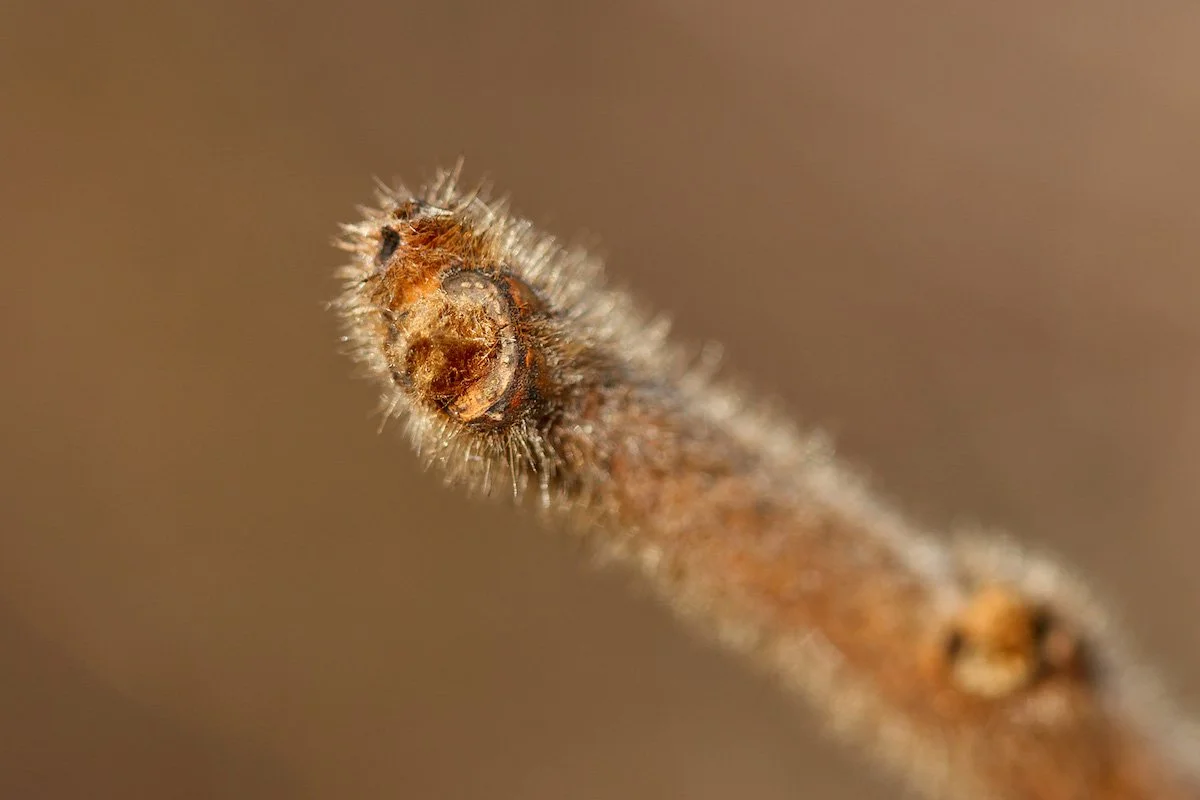
These fuzzy, antler-like branches give the Staghorn Sumac its name. Image: Tom Pottersfield
But did you know that Staghorn Sumac fruit is actually edible? Sumac has a long and culturally significant history and has been used for a variety of purposes. The tart and lemony flavoured “berries”, rich in vitamin C, can be dried for spices, steeped in hot water to make teas, or boiled down to make ink. The bark and leaves, rich in tannins, have traditionally been used to tan hides. The plant also has a history of therapeutic use, thanks to its antioxidant properties.
You are likely to see this plant in many different landscapes, but in natural spaces like Georgian Bay, it tends to be one of the first colonizers to fill areas that have recently been disturbed. This means you might see it along roads or developments, in meadow-like areas or along forest edges.
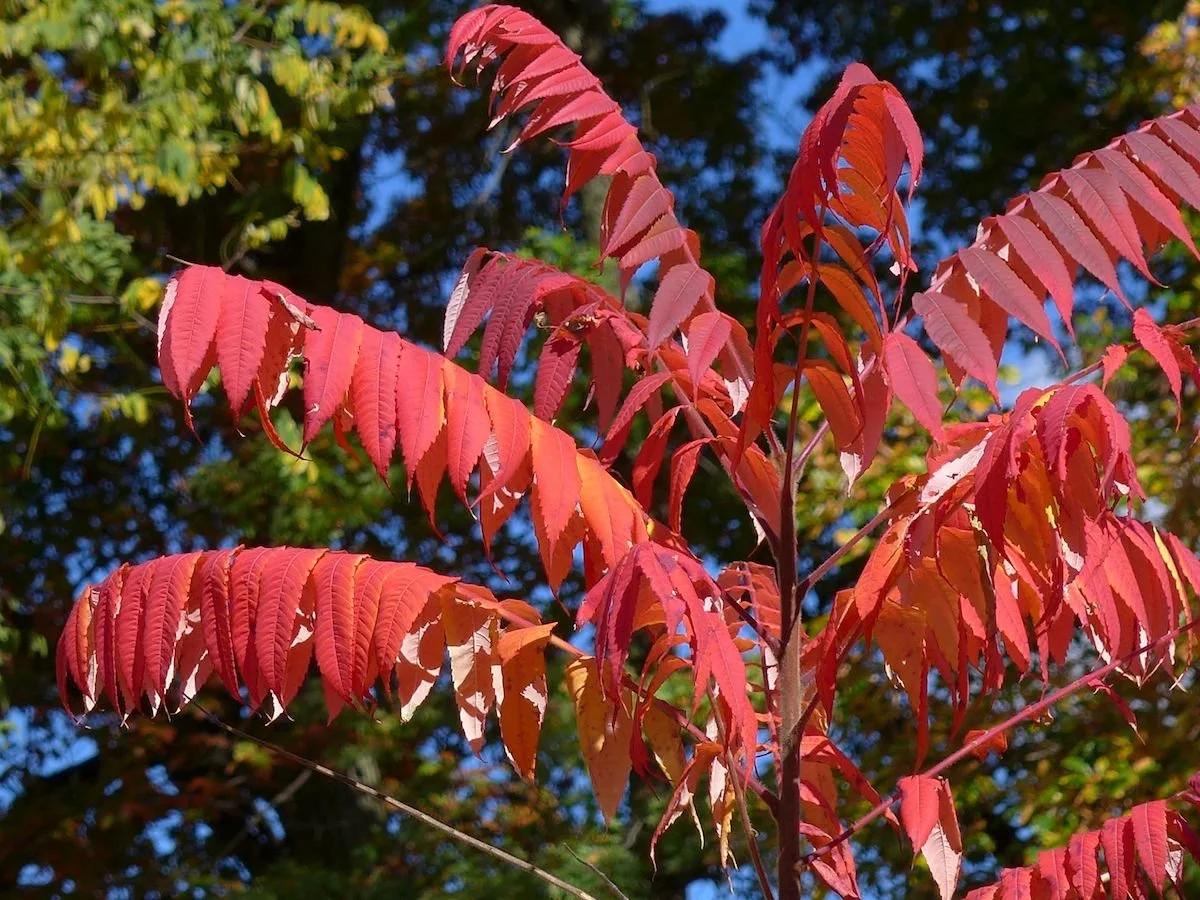
The sumac’s fall foliage. Image: Kate St. John
Sumac spreads easily by rhizomes - underground, horizontal plant stems that send up new shoots above ground, making new plants. The new plants are genetically identical to the original or “mother” plant; and off to a good start - the mother plant provides energy and nutrients to its’ younger offshoots and helps it grow quickly. Because these baby plants can also reproduce through rhizomes, this can lead to exponential growth, at times forming vast sumac thickets. In fact, sometimes sumac can sprawl so much in open areas it can be considered invasive and almost weed-like. Despite its pervasiveness, Staghorn Sumac is intolerant to dense shade; it needs the sun to thrive.
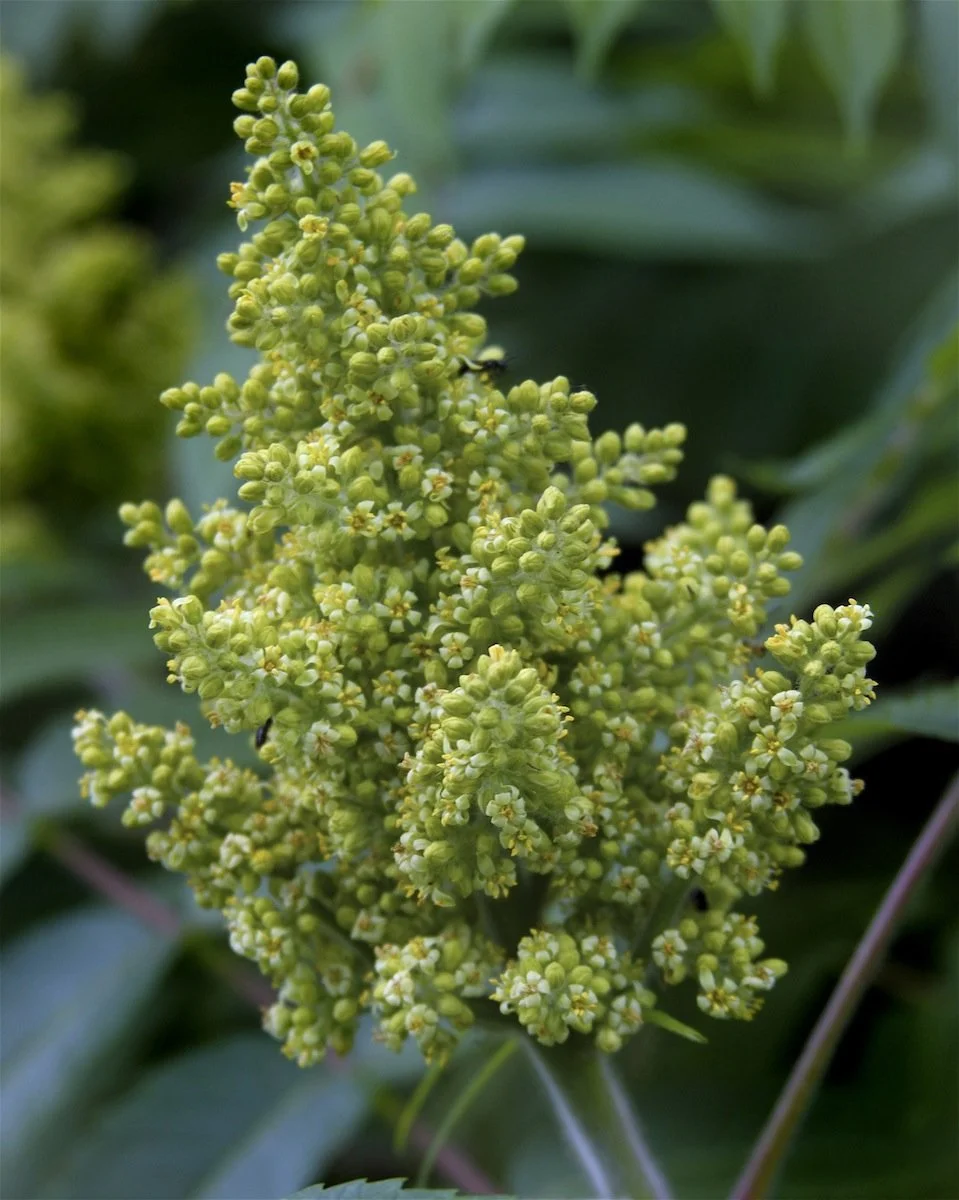
Sumac flowers in spring. Image: Dan Mullen
But if sumac can reproduce easily through rhizomes, why go through all that effort to create flowers and fruits? Sumac is not alone in using both asexual and sexual reproduction (think raspberries, balsam fir, and yes, sadly, phragmites!). This multi-strategy approach is advantageous because it allows sumac to spread both locally and farther afield via wind dispersal, establishing new populations with genetic diversity. It’s genetic diversity that equips the species with the ability to evolve with environmental pressures for long term survival.
In Georgian Bay, Staghorn Sumac is a native species that is beneficial to the local environment. Sumac trunks are forked, and the branches are spreading, providing a great refuge for birds and animals including its namesake - deer! It also attracts insects, like bees and wasps, helping to support pollination.
So the next time you see a Staghorn Sumac, take a closer look – notice its clustered berry like fruits, its intricate branching structure, and fuzzy antler-like stems. Can you identify it in all four seasons? That’s your challenge!

Image: Thomas Esce