Celebrating 15 years of the Kemerer Conservation Easement
Fifteen years ago, Peter and Cynthia Kemerer decided to make sure that the landscape they loved around their cottage would remain wild forever.
The conservation easement they created with the Georgian Bay Land Trust has become a proud part of their family’s legacy on Georgian Bay, now lovingly looked after by their daughter Natalie and her family.
“I love protecting all the little creatures,” says Natalie. “I try to leave things as natural as possible. We have good biodiversity on our property because we focus on natural things.”
The Kemerers have been cottaging on Cognashene’s Bone Island since the mid 1980s, having moved there from a nearby cottage where Peter grew up. Natalie believes that her parents were inspired by their neighbours to consider a conservation easement, but that protecting the land also always came naturally to them. “My parents were very conservation minded, and did a lot of volunteering and fundraising,” she says. Once they became involved with the Land Trust, they started hosting “Shakespeare on the Rocks” fundraisers attended by their neighbours in Cognashene.
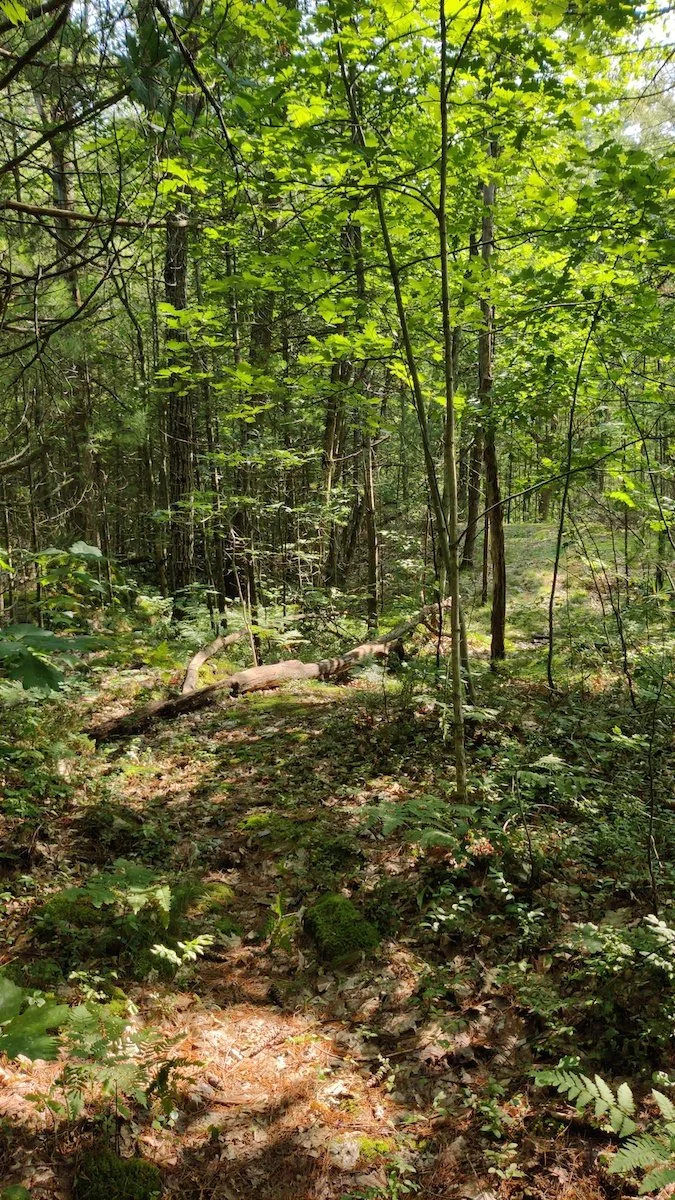
Conservation easements are agreements in which landowners commit to maintaining all or some of their property in its natural state forever. In the Kemerers’ case, the cottage sits on 2 acres of buildable land at the front of their property, and the easement covers the remaining 12 acres of forest and wetlands.
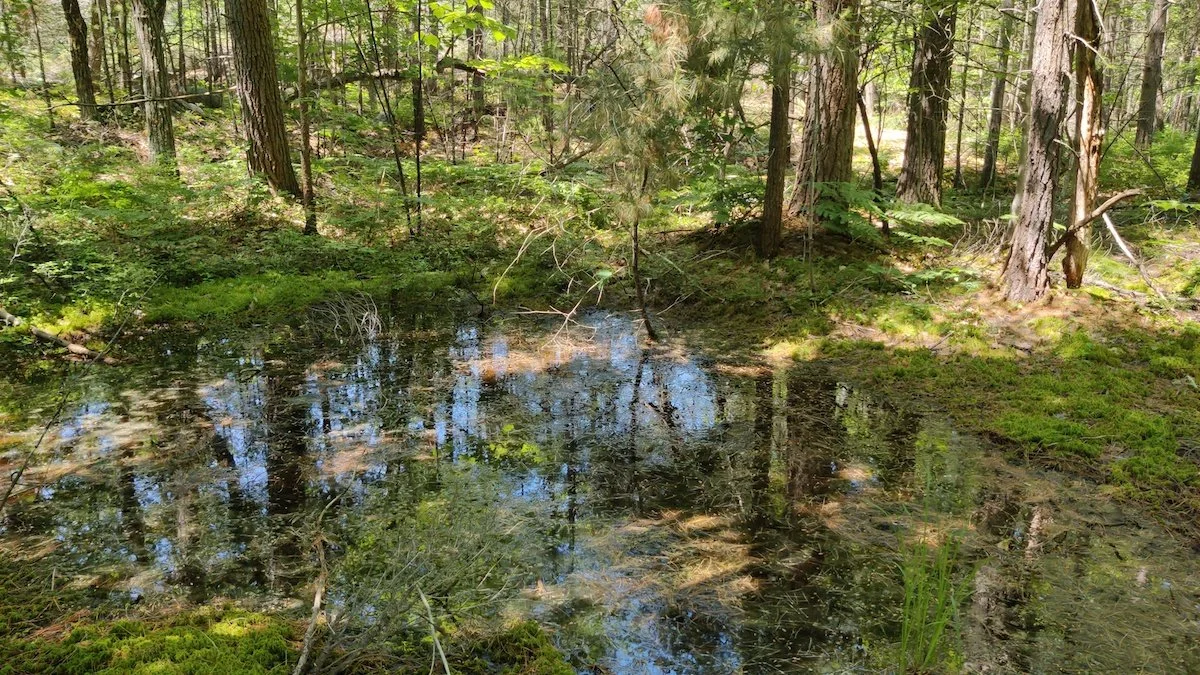
These 12 acres include extensive white pine and oak forest, interspersed with rock barrens and boggy depressions. These diverse habitats support a variety of animal life, including important breeding habitats for birds and reptiles. “We love all our animals: salamanders, birds, snakes, mammals,” says Natalie. “We love that there are pileated woodpeckers that come through, hummingbirds, and hawks soaring. We had a good year with a bear and some cubs, which was exciting. When you leave your property natural and you’re kind of quiet and not very obtrusive you are rewarded by seeing a lot of life around you.”
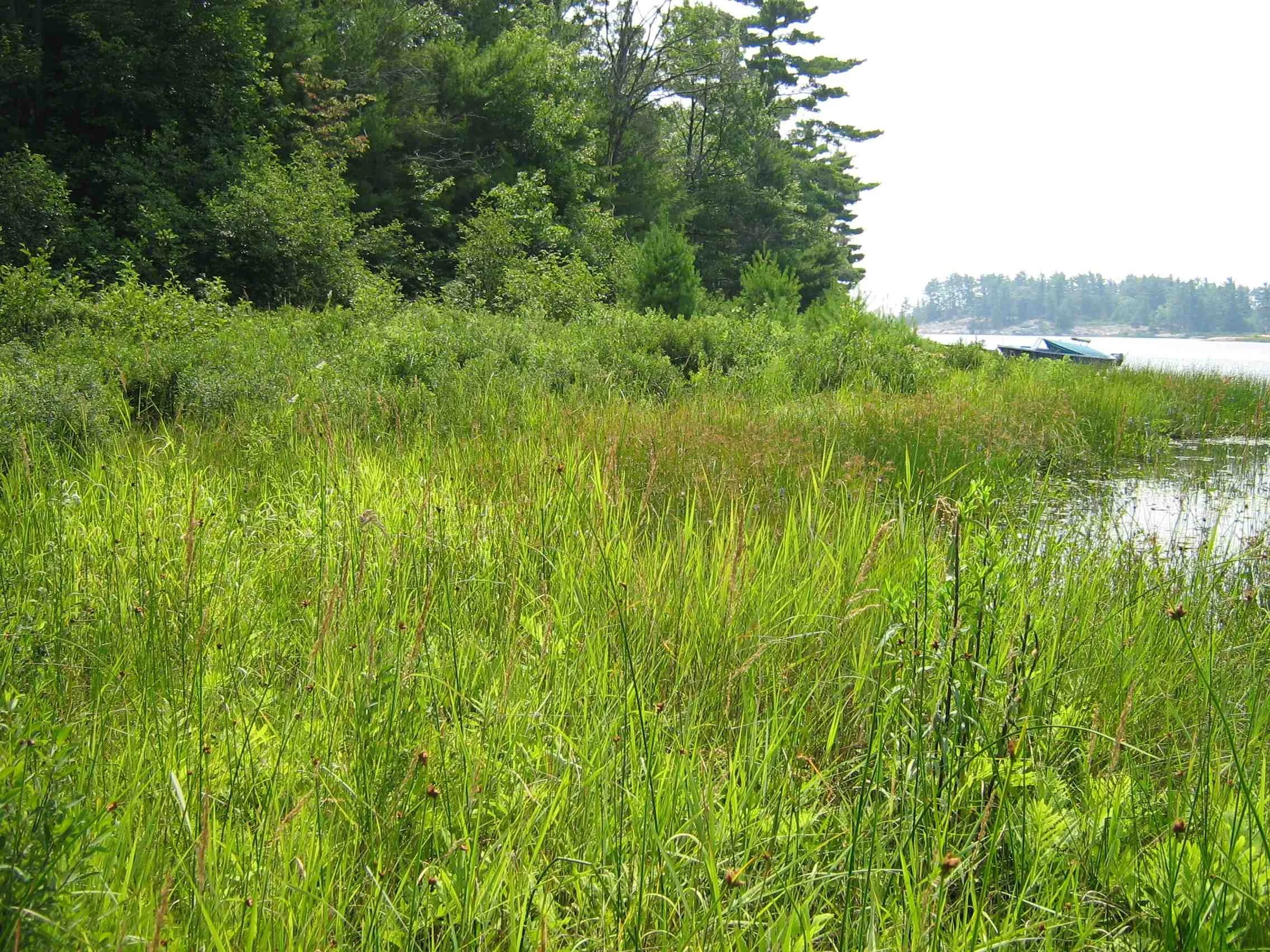
Their natural shoreline also supports a lot of life - not only fish, turtles, and birds, but also rare Atlantic Coastal Plain plants including Carolina yellow-eyed grass. Atlantic Coastal Plain flora is a special phenomenon in Georgian Bay and Muskoka, an ice-age relic where plants that are almost exclusively found on the east coast are also found growing in small pockets here on the Bay.
Natalie describes herself as “deeply devoted to the land”. She is passionate about identifying and encouraging native plants, and tackling invasive species whenever they pop up. She regularly hikes the property’s trails with her family.
“We try to enjoy as much of it as we can. We walk back there – during Covid we hiked back there all the time. We have several special spots that we go to, and a lot of family memories of those hikes.”
In 2015, the cottage that the Kemerers built in the ‘80s burned to the ground. Out of this disaster a new cottage was built, and Natalie has been observing the changes in the landscape post-fire. “There is a massive amount of biodiversity that has appeared,” she says. “To watch the expansion of the ecosystem every year since the fire is really unbelievable. I’m seeing flowers and plants I didn’t know were present here.”
Placing a conservation easement on their property means that the Kemerers have guaranteed that it will remain in its natural state forever, no matter who owns the land in future years. They are free to sell the property or pass it on to heirs, but the conservation easement remains on title, and the Georgian Bay Land Trust monitors the ecology of the land once a year. The Kemerers received a tax receipt to offset the financial property value that they have given up in creating the easement.
“I really love the idea of protecting natural areas in perpetuity,” says Natalie. “I think it’s a very important thing for people to do. We don’t think of ourselves as owning the land – we’re stewards.”
What does Georgian Bay mean to Natalie? “It’s part of one of the most unique landscapes in the world. My dad grew up there, we grew up there, our kids are growing up there. There’s something about that place that just holds you. The pine trees, the rocks – I think it deeply affects the people that stay there and that visit there.”
Natalie, we are so grateful to you and your family for doing your part to protect this landscape and all of its inhabitants forever.
