Celebrating the Protection of the 365-acre Honey Harbour Nature Reserve

The Honey Harbour Nature Reserve from above. Photo: Adam Grottoli
The Georgian Bay Land Trust is celebrating the creation of a new conservation area, thanks to the efforts of residents and cottagers in Honey Harbour, and support from the Natural Heritage Conservation Program through Canada’s Nature Fund. The new Honey Harbour Nature Reserve protects 365 acres (177 hectares) of pristine forests, wetlands, and shoreline – forever.
One of the largest remaining undeveloped parcels in Honey Harbour, the property is home to rich forests, significant wetlands, and breeding habitat for many species, including an established Great Blue Heron rookery. It was brought to the Land Trust’s attention by local cottagers in 2025, when it was put up for sale for the first time in over 120 years.
The Georgian Bay Land Trust launched a fundraising campaign in the fall of 2025, and within 6 weeks had raised the $750,000 necessary to purchase this land and conserve it forever as a nature reserve. This project was made possible by contributions from community members, the Ontario Conservation Accelerator, and the Government of Canada’s Land Trusts Conservation Fund (LTCF), part of the Natural Heritage Conservation Program (NHCP) through Canada’s Nature Fund.
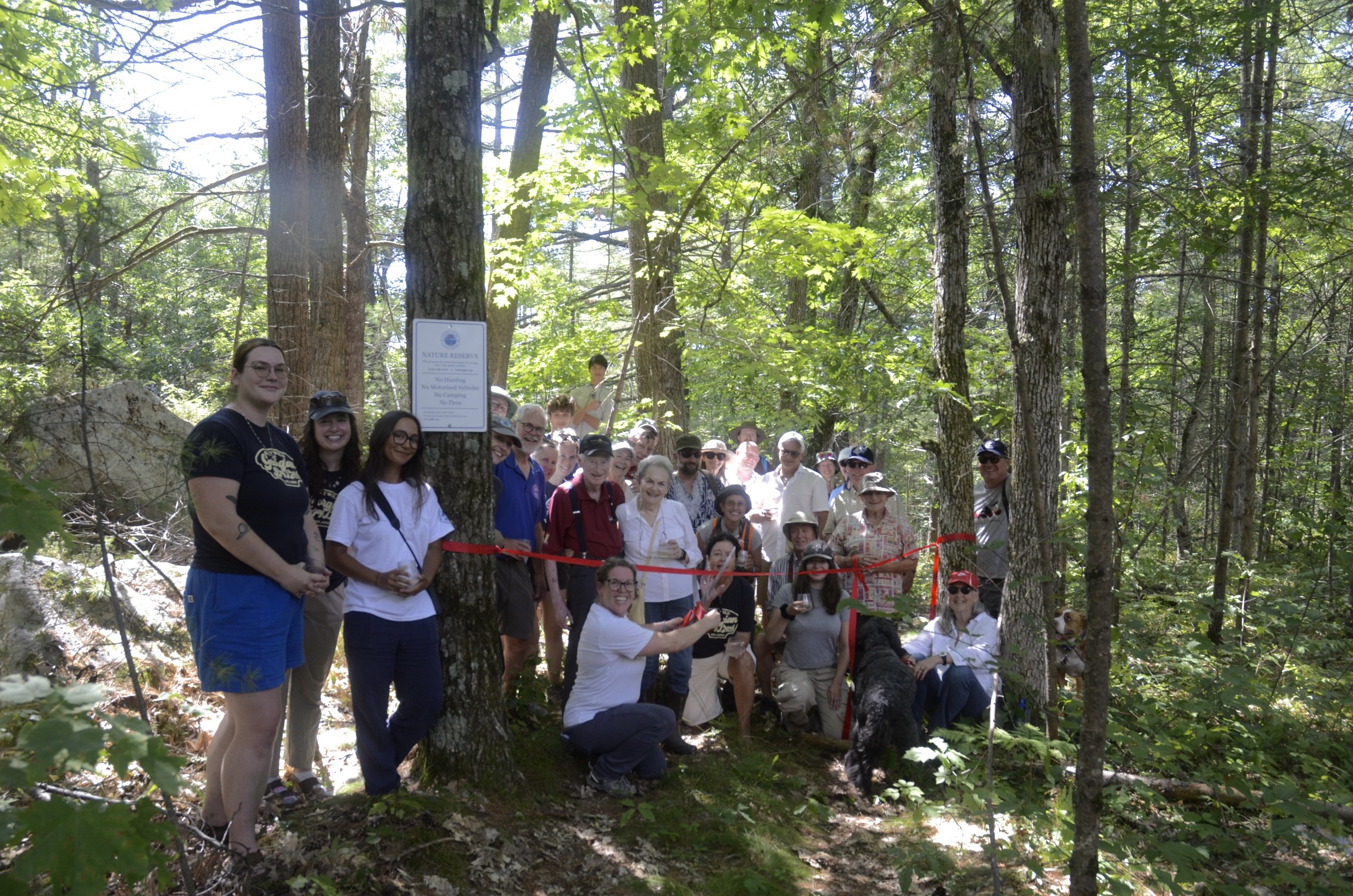
The Georgian Bay Land Trust gathered with donors, volunteers, and the property’s previous owners to officially dedicate the Honey Harbour Nature Reserve on August 14, 2026. Photo: Rachel Vandervelde
“We’re very grateful to all the community members who came together to conserve the Honey Harbour Nature Reserve,” says Andrew Young, Executive Director of the Land Trust. “This truly was a community effort, and we were blown away by how many people stepped up so quickly to protect this amazing place. It’s a testament to how important the natural environment is to this community, and the value of protecting nature.”
This property’s ecological values are exceptional. It contains parts of two Provincially Significant Wetlands and one of only five designated Areas of Natural and Scientific Interest (ANSI) in Georgian Bay. Habitat features include mature forests, streams, beaver ponds, and Canadian Shield outcroppings. This rich ecology supports the environmental health of the surrounding community, providing breeding habitat for many species, and maintaining water quality through natural water filtration.
One of the most interesting features of the Honey Harbour Nature Reserve is a Great Blue Heron rookery, where numerous herons build their nests in standing dead trees. The property’s wetlands provide breeding grounds for fish, and act as important stopover and nesting sites for waterfowl. A wide array of plants and animals, including multiple species at risk, use the property’s diverse habitats.
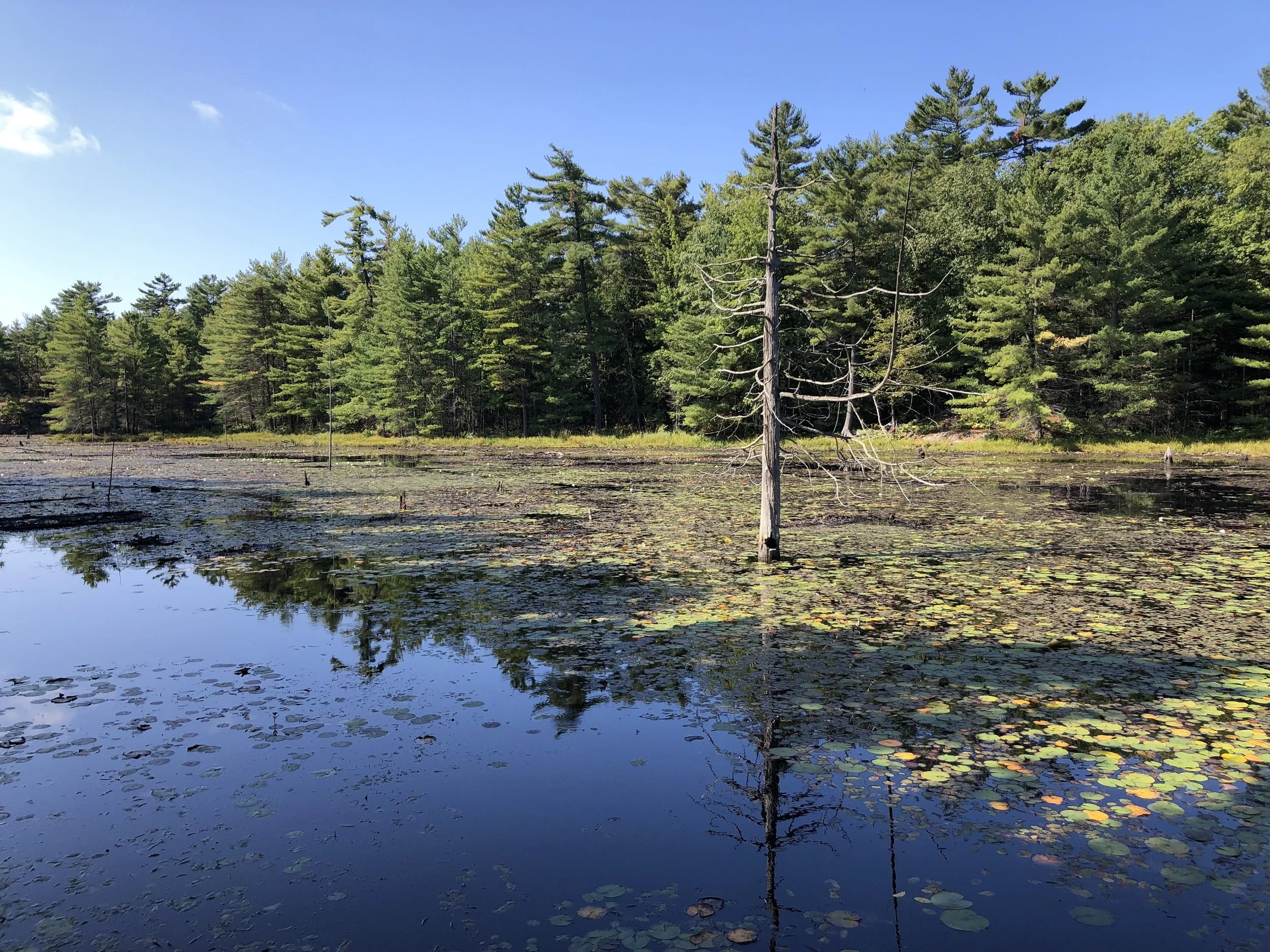
The wetlands of the Honey Harbour Nature Reserve provide habitat for numerous species at risk, and nesting Great Blue Herons. Photo: Sarah Koetsier
These large and diverse lands are an important link for natural connectivity in the region. The property abuts the McCrae Lake Conservation Reserve, Crown land, and lands protected through the Georgian Bay Land Trust’s Corridor Project, which aims to create a continuous ecological corridor along the eastern Georgian Bay coast. Maintaining these natural corridors allows wildlife to move between these lands and waters, facilitating large-scale migrations and the local survival of many species, including large mammals.
The Georgian Bay Land Trust is grateful to the many donors who supported this project and made it possible to protect this ecological jewel forever.
