Frogs and Toads of Georgian Bay

Jen Kernaghan
Now that spring is here, it’s time to start listening for the sounds of frogs and toads around Georgian Bay. Georgian Bay is home to nine species of frogs and one species of toad, all of which can be easily identified by sight with some practice. During the breeding season, you may also hear them calling, as the nighttime temperature prompts them to begin singing. Different amphibians start calling at different temperatures and we can break those into three calling groups to make identification easier.
The Early Spring Callers
Spring peepers, wood frogs, and western chorus frogs are the frogs that you’ll most likely hear first, calling as soon as nighttime temperatures stay above five degrees. They are found mainly in wetland areas, but they’ll also use vernal pools for breeding. Vernal pools are temporary pools of water that usually dry up in the summer, so they don’t have predators and amphibians can use them as a safe breeding location.
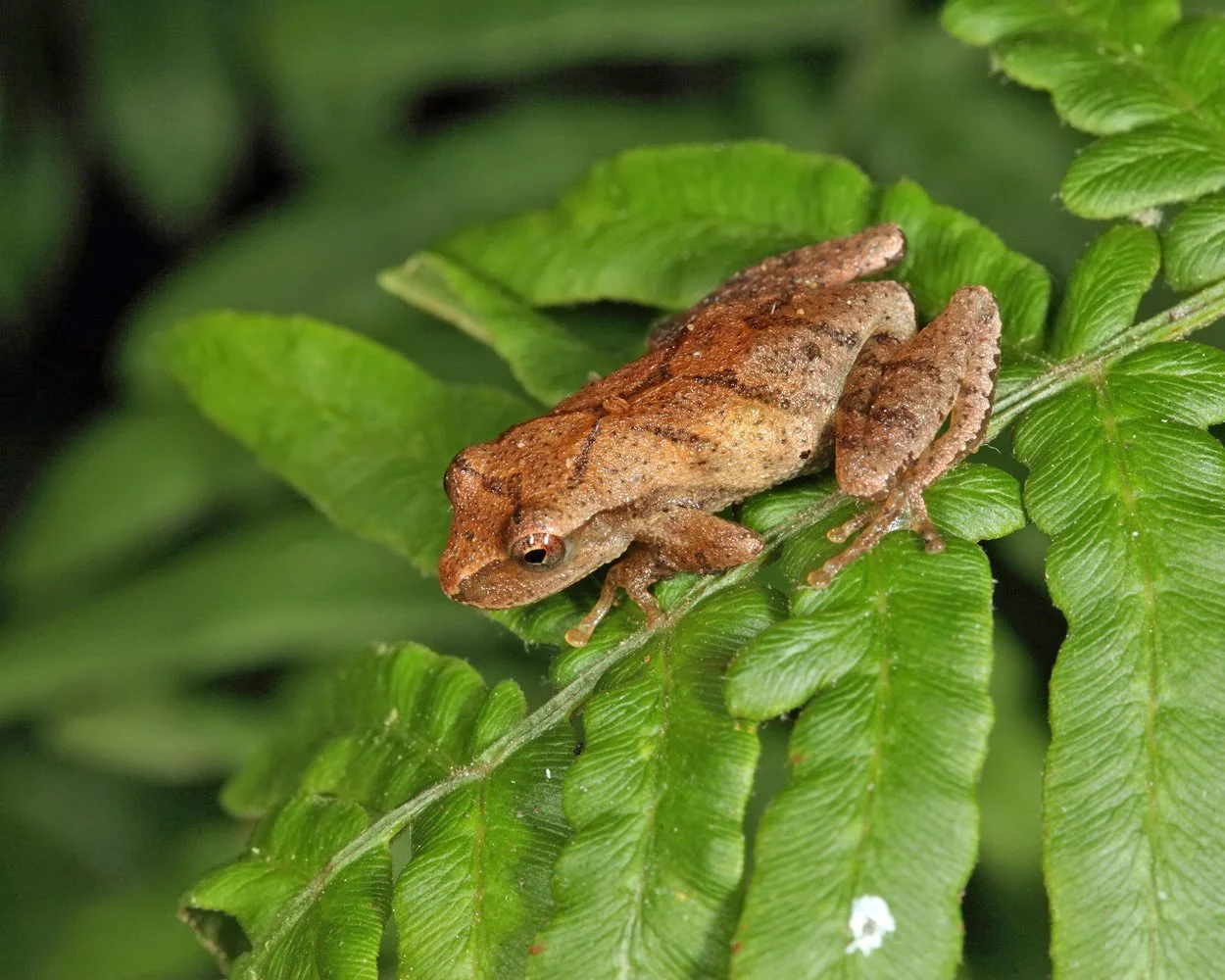
Spring Peeper - Tom Murray
Spring peepers are a smaller species of tree frog and have one of the more distinctive calls, especially when in full chorus. Their distinctive, loud “peep” is well-known to anyone who lives near a wetland. You can also identify them by the “X” on their back and small size when hopping around on the ground.
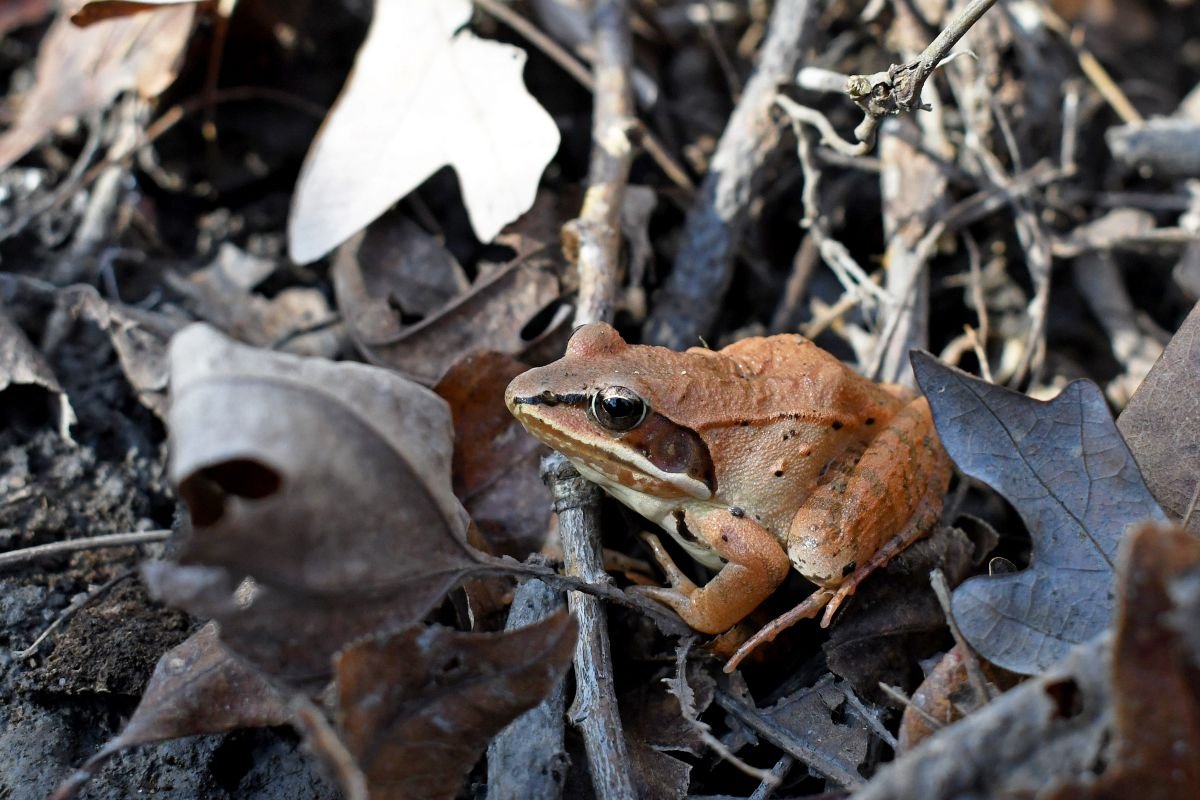
Wood Frog - Brian Henderson
Wood frogs are a species most often seen and heard from isolated bodies of water, like the aforementioned vernal pools. Their call sounds like ducks quacking, so it can be sometimes mistaken as the call of a bird. The large black “mask” beneath their eye is a diagnostic feature and is the easiest way to identify the frog by sight.
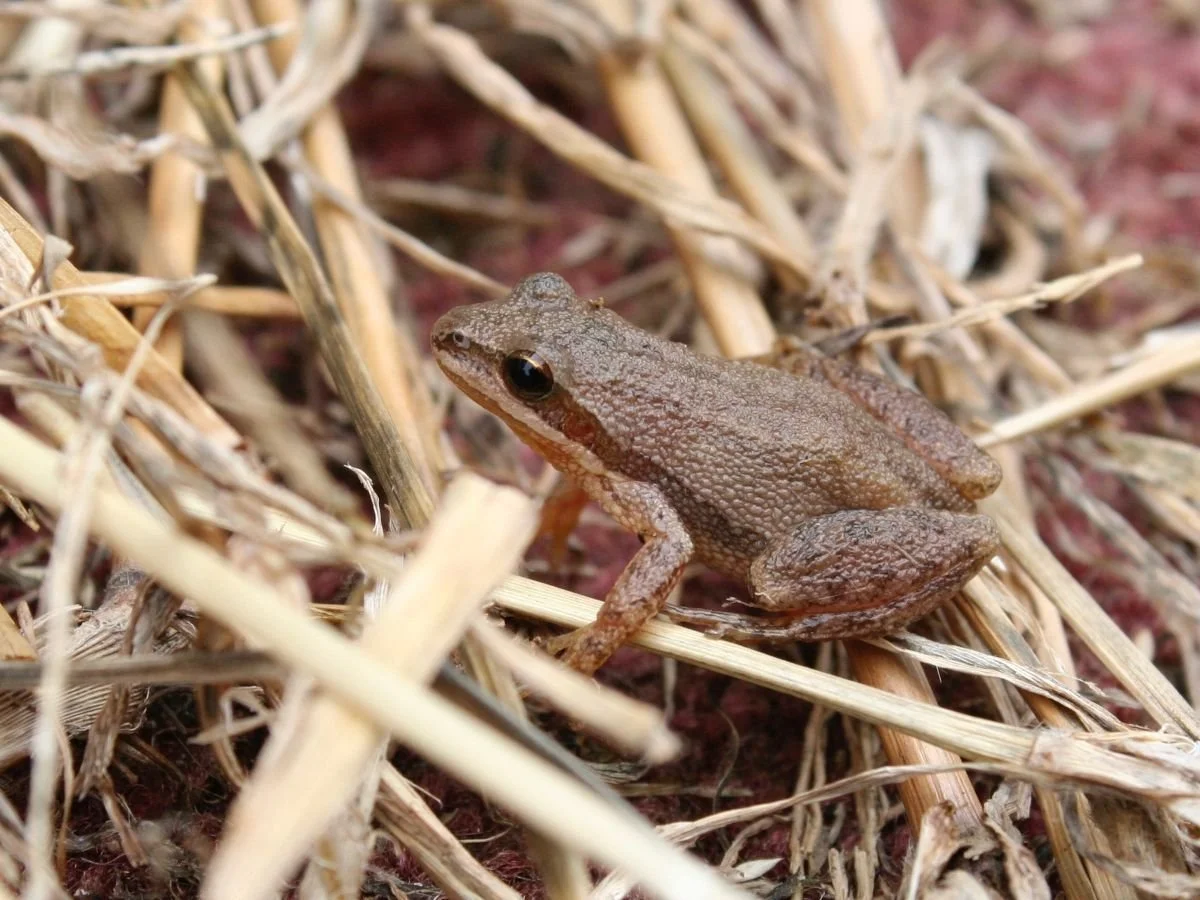
Western Chorus Frog - Douglas Mills
Western chorus frogs are the only frog species that is currently identified as a species at risk. Their call sounds like a finger being dragged along a comb. It is similar to the spring peeper’s alternate call, but it is more monotonous and often given several times. They look similar to a spring peeper, but the markings on their back are three parallel lines as opposed to an “X”.
The Late Spring Callers
American toads, pickerel frogs, and leopard frogs are the next three species to begin calling, usually near the end of April or start of May. You’ll hear them once nighttime temperatures reach ten degrees, though leopard frogs sometimes start calling a bit sooner than that. Both of the frog species prefer wetlands, but American toad can be found in several different habitats as they are a habitat generalist.
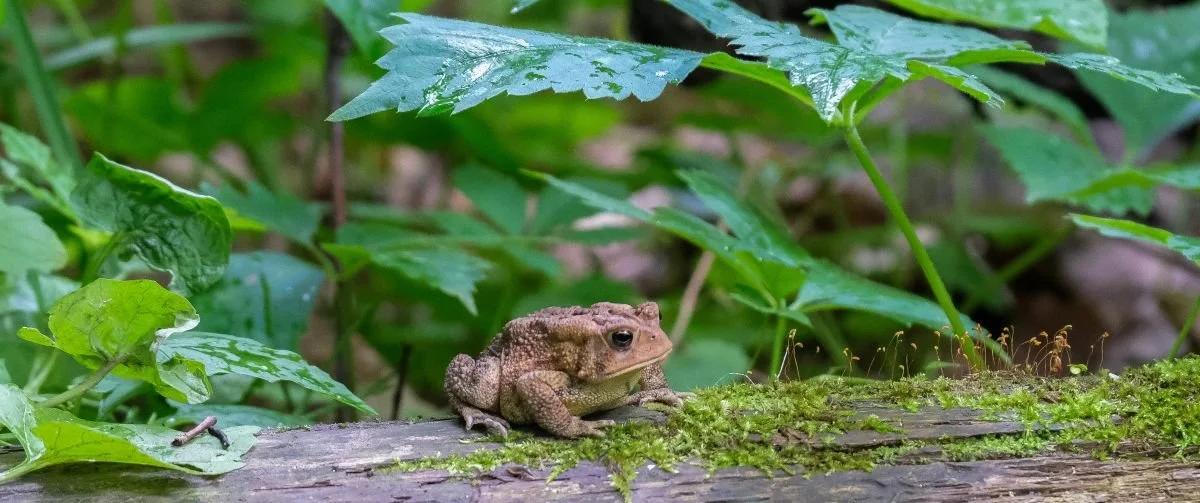
American Toad - Michael Hunter
American toads are the only species of toads that we have in Georgian Bay, which makes them fairly easy to identify even though they can have large size variation. Their call is a long trill, which can last as long as thirty seconds. When in chorus, each toad will call at a different pitch to make sure that potential mates can hear it. You can recognize them by their warty appearance and rough skin.
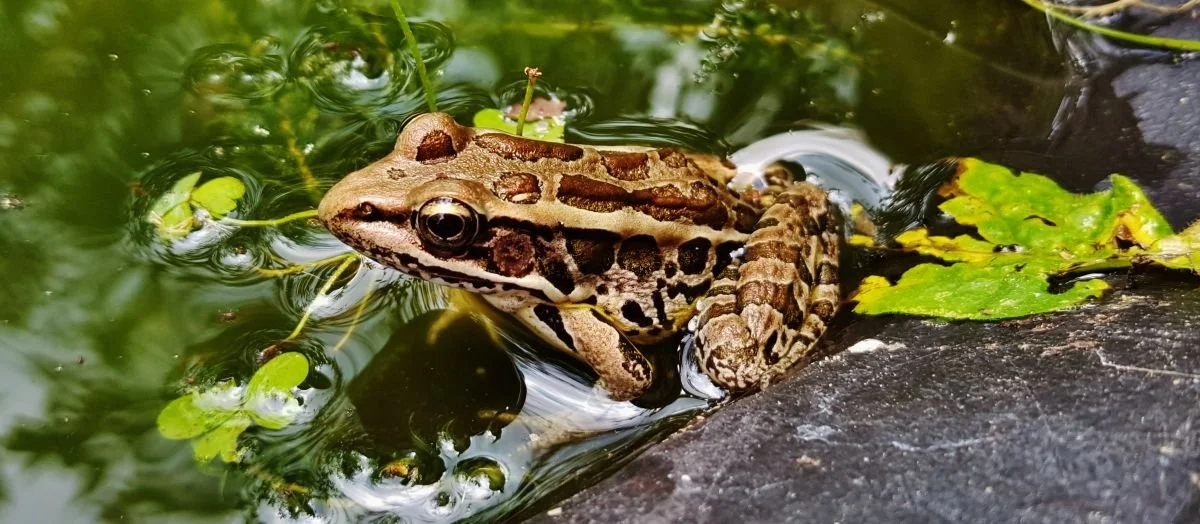
Pickerel Frog - Matthew Beziat
Pickerel frogs like open water marshes and you can often find them in areas where water lilies are present. Their call sounds like a long, loud snore. Field identification of pickerel frogs is easy, as they’re the only amphibian species with rectangular spots. The spots run in two rows down their back and can be quite large.
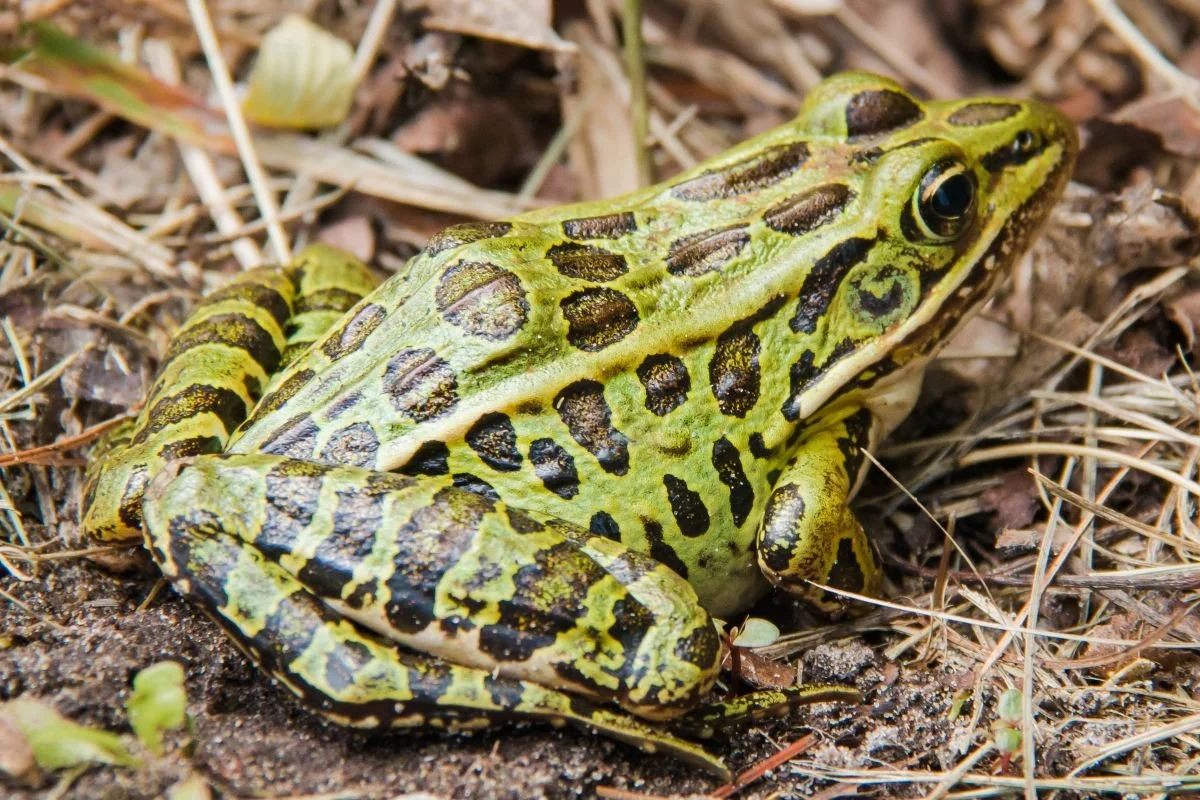
Leopard Frog - AllieKF
Leopard frogs are a commonly seen frog, with variable colouration and blacks spots on their body. They sound like a pickerel frog, with their call starting with a snore, followed by a low chuckle. I prefer to think of their two-part call as a creaky door opening, followed by a ghost chuckling. The leopard frog has round or oval spotting on the back and is often a green colour, though there is colour variation in the species.
The Early Summer Callers
The last four species of frogs to start calling are the American bullfrog, green frog, mink frog, and gray treefrog, who often start calling at the end of May or early June. These frogs start calling when nighttime temperatures are above fifteen degrees and prefer nights with low wind and precipitation. Due to their late breeding times, they can’t use vernal pools and breed in a variety of different wetland types.
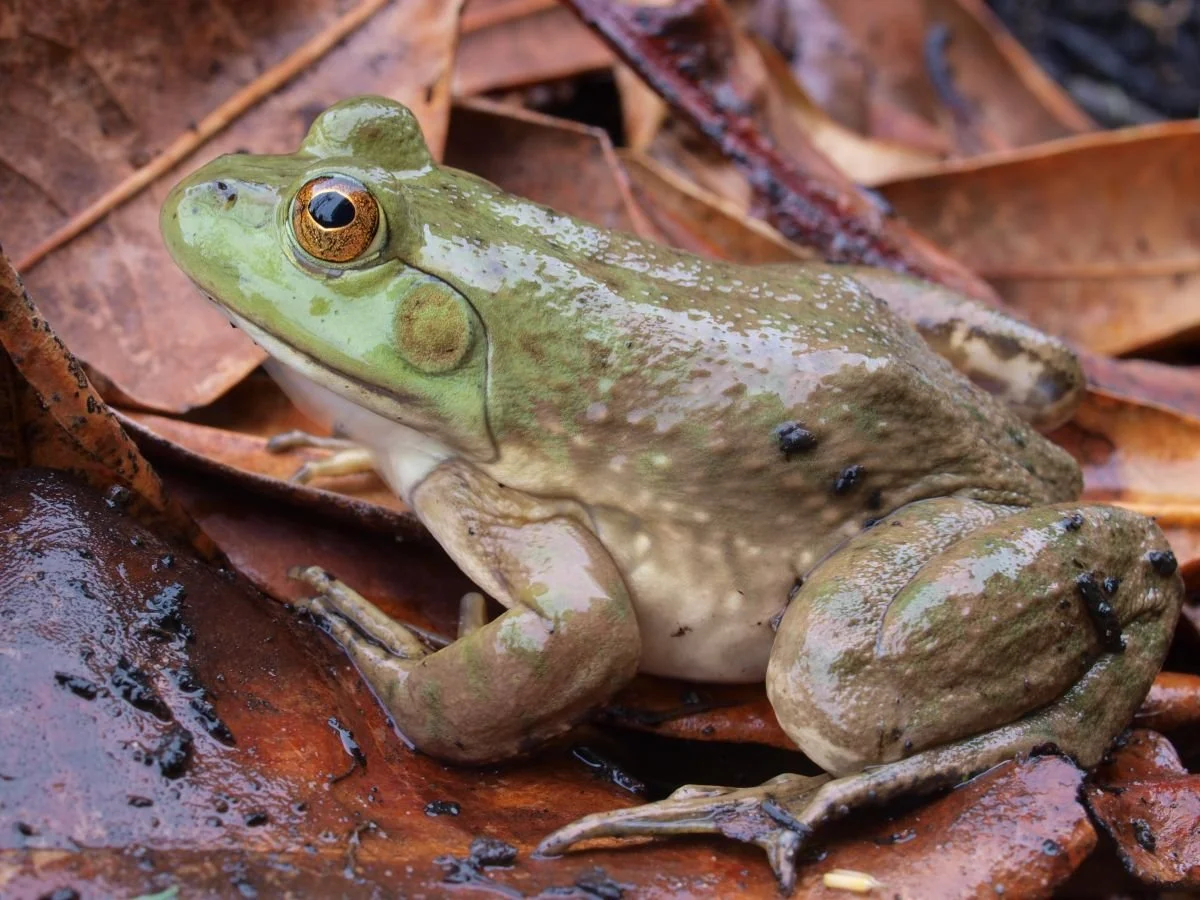
American Bullfrog - Will Brown
American bullfrogs are the largest species of frog that we have in Georgian Bay and their large size is usually a good way to identify them. Their call is a low “jug-o-rum” which sounds similar to a low, twangy hum. Outside of their size, bullfrogs can also be identified by the lateral folds that wrap around their tympanum.
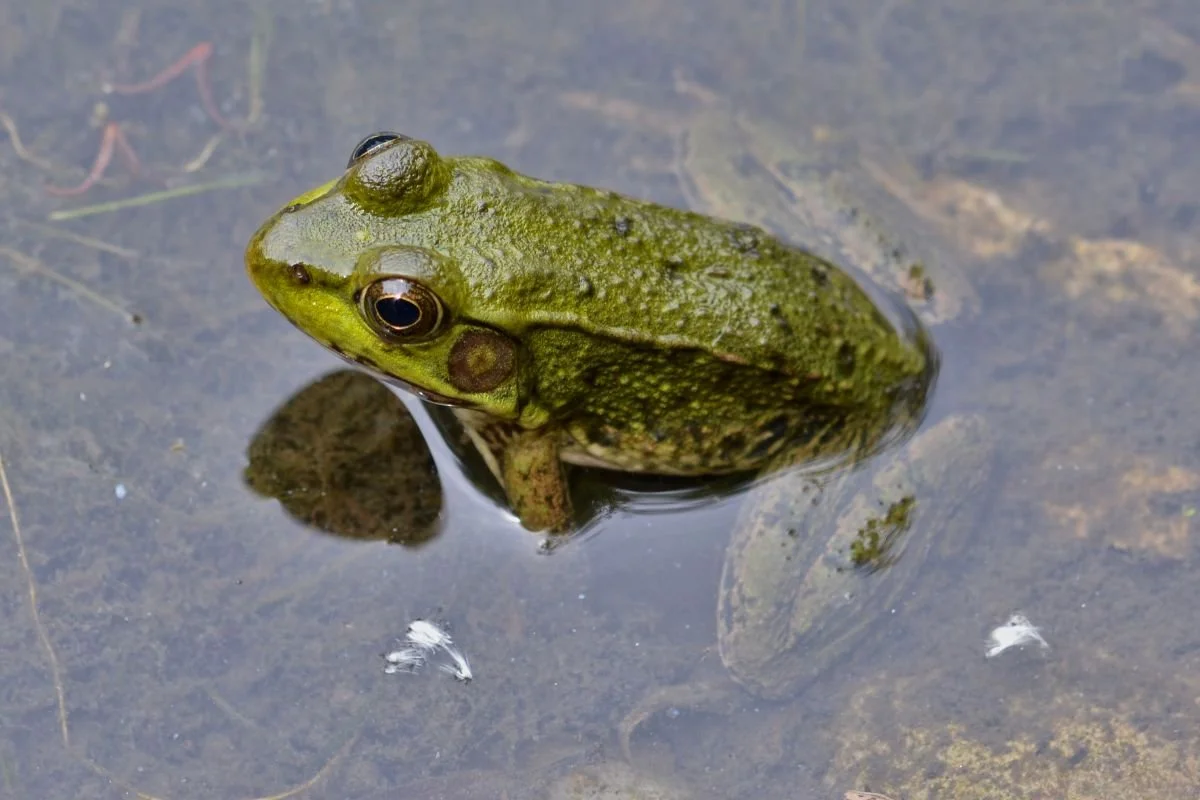
Green Frog - Ryan Hodnett
Green frogs are one of the more common species around Georgian Bay, but are also very variable in colouration and patterns. Their colouration can range from brown to green, and they can have some spotting or almost none. Their call is a distinctive “gunk” usually given frequently and sounding a bit like the twang of a guitar string.
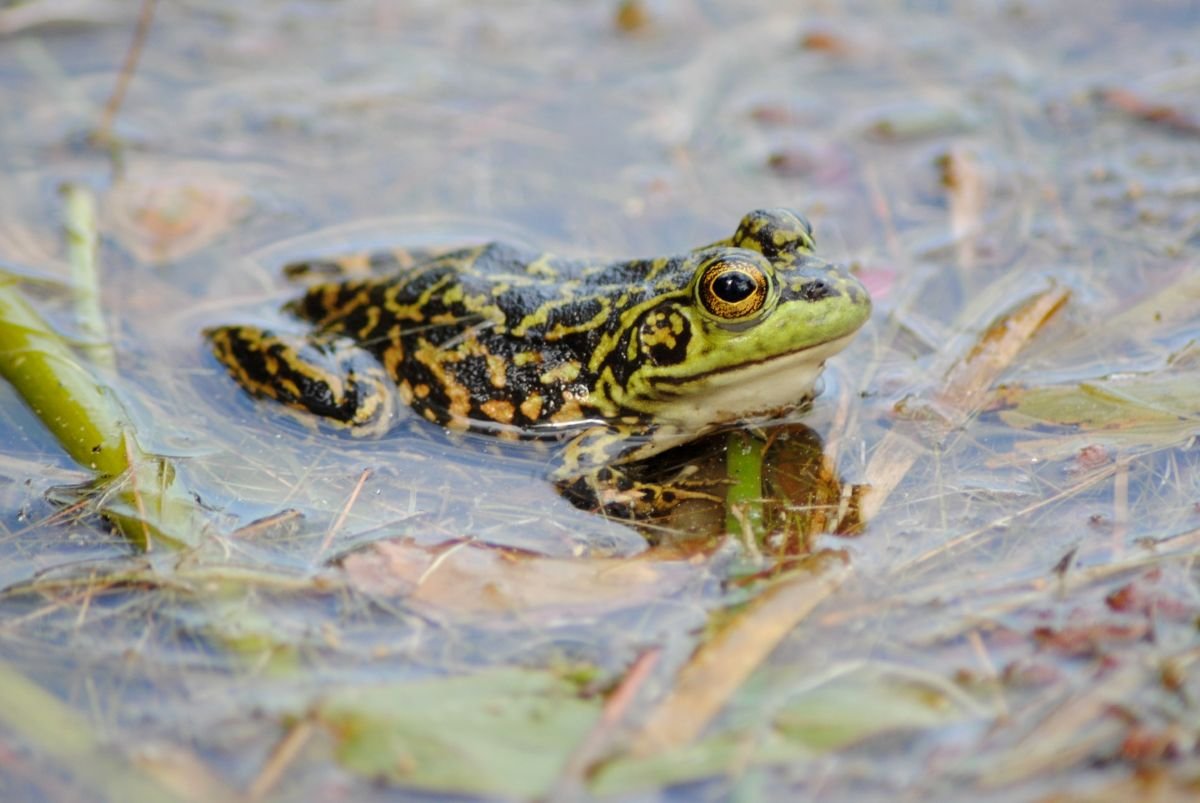
Mink Frog - Mike Ostrowski
Mink frogs are an uncommon frog in the area and like pickerel frogs, can often be found where water lilies are present. Their call sounds like a hammer striking wood, a quick “cut, cut, cut”. They are unique in that they don’t often have distinct spots and instead have a mottled pattern to their back.
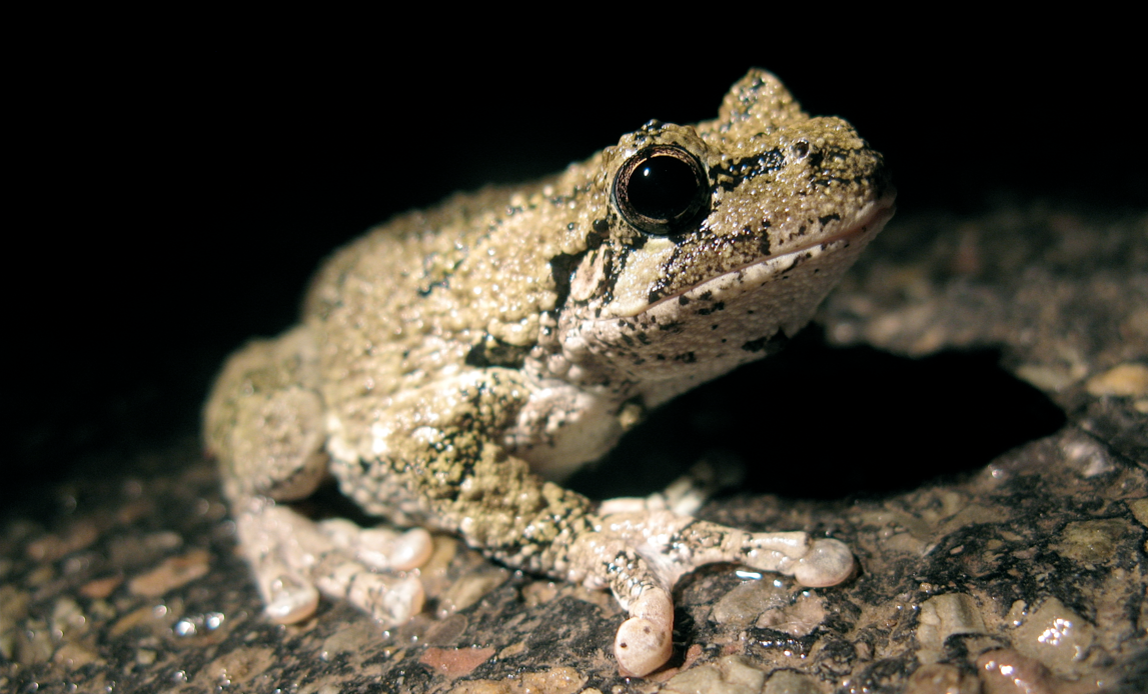
Gray Treefrog - Dave Huth
Gray treefrogs are a species of treefrog, so have distinct toe pads to assist with climbing. They also have the ability to change the colour of their skin, often appearing green or gray depending on where they are. Their call is a bird-like trill, similar to the call of the Red-bellied Woodpecker, and it’s often given from the canopy of trees.
Most of our frogs and toads will stop calling after they finish breeding, so their calling decreases as the summer progresses. In the fall, you may hear their calling begin again for a short period. This is due to the changes in daylight, as it is hypothesized that fall is similar to spring with regards to temperature and the amount of daylight. Learning how to identify frogs and toads can be a bit tricky, but it’s rewarding, as many nights on Georgian Bay are filled with the calling of frogs and toads, especially if you live near a wetland.
To listen to these frog and toad calls, visit www.naturewatch.ca/frogwatch/ontario.